
Navigating the AI Training Process for SMB Success
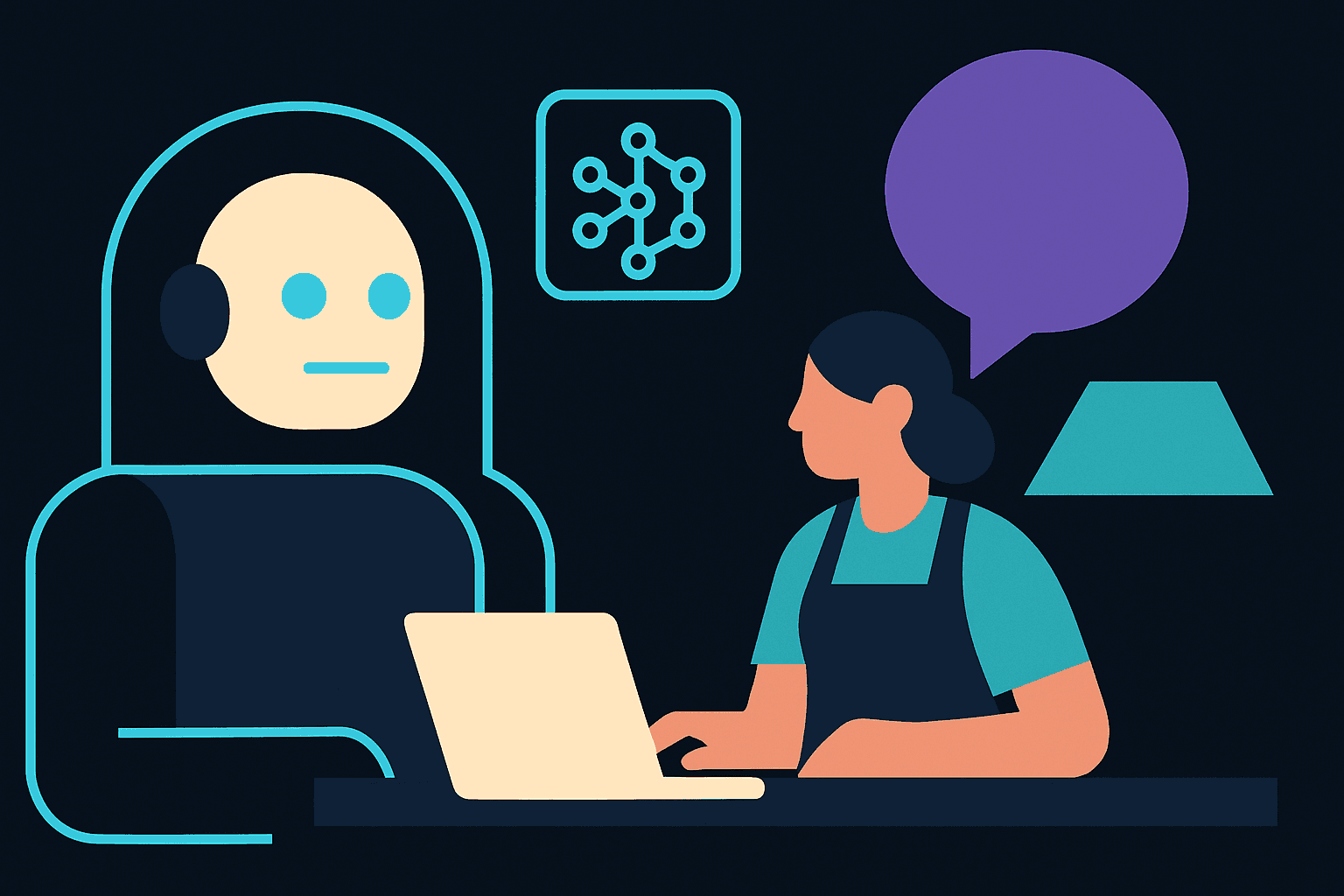
Understanding the Importance of AI Training for SMBs
As a small or medium-sized business owner, you're likely aware of the potential that AI automation holds for streamlining operations and increasing efficiency. Yet, properly training AI tools can be daunting, especially when you're working with limited resources. This post will guide you through the intricacies of training AI effectively within your business context, allowing you to maximize the benefits of AI automation.
The Fundamentals of AI Training
Training an AI system involves feeding it large amounts of data so it can learn and make decisions. For small businesses, this task might seem overwhelming, but starting with the basics can mitigate complexity:
-
Define Clear Objectives: Begin by clearly outlining what tasks the AI is intended to handle. This could be anything from customer service chatbots to predictive analytics.
-
Data Collection: Gather relevant data that reflects the task. For example, if you're automating customer service, historical chat logs can be invaluable.
-
Select the Right Tools: Leverage AI platforms that offer user-friendly interfaces tailored for small businesses. These tools often provide pre-trained models that can be customized.
Overcoming Resource Constraints
Small businesses often face unique challenges in terms of budget and staffing for training AI. Here are some strategies to help:
-
Use Open Datasets: Freely available datasets can supplement your data, providing a foundation on which your AI can begin learning.
-
Leverage Cloud-Based Solutions: These solutions are often pay-as-you-go, allowing you to scale as needed without hefty upfront investments.
-
Collaborate with Partners: Partnering with an AI consultant like Insolla can provide the expertise and resources you might lack internally.
Avoiding Common Pitfalls
Mistakes in AI training can lead to inefficient models and wasted resources. Be vigilant of the following pitfalls:
-
Data Bias: Ensure your training data is diverse and representative to avoid biased outcomes.
-
Overfitting: Training your model too much on specific data can make it inflexible to new, unseen data.
-
Incorrect Metrics: Use relevant metrics to evaluate AI performance. For customer service AI, response accuracy might be more important than speed initially.
Real-World Example: Small Retailer Success
Consider a small online retailer looking to improve inventory management through AI tools. By categorically tracking sales data and employing AI for demand forecasting, the retailer reduced overstock situations by 25% within six months. The key was incrementally training the AI, starting with a limited product range and expanding as the model became more accurate.
Scaling AI Training as You Grow
As your business grows, your AI models will need updates and expansions:
-
Iterative Training: Regularly update your AI with the latest data to improve its performance continuously.
-
Advanced Features: Once the basics are covered, explore advanced AI features like natural language processing for deeper insights.
-
In-house Expertise: Investing in basic AI training for your staff can yield long-term benefits as they can tweak models without relying solely on external help.
Conclusion and Next Steps
AI training doesn't have to be the exclusive domain of tech giants. With clear goals, appropriate tools, and the right approach, small businesses can harness the power of AI effectively. If you're ready to explore how AI can be tailored to streamline your operations, contact Insolla at /contact to learn how we can assist in training and deploying AI systems that align with your business goals.
How automated is your business?
Take the free 2-minute scorecard to find out where automation could save you the most time.
Get automation strategies in your inbox
Real workflow automation playbooks, not theory. See what works for teams like yours.